


Skip to content

News

DSC_3988
New Dynamic Lab
About Us
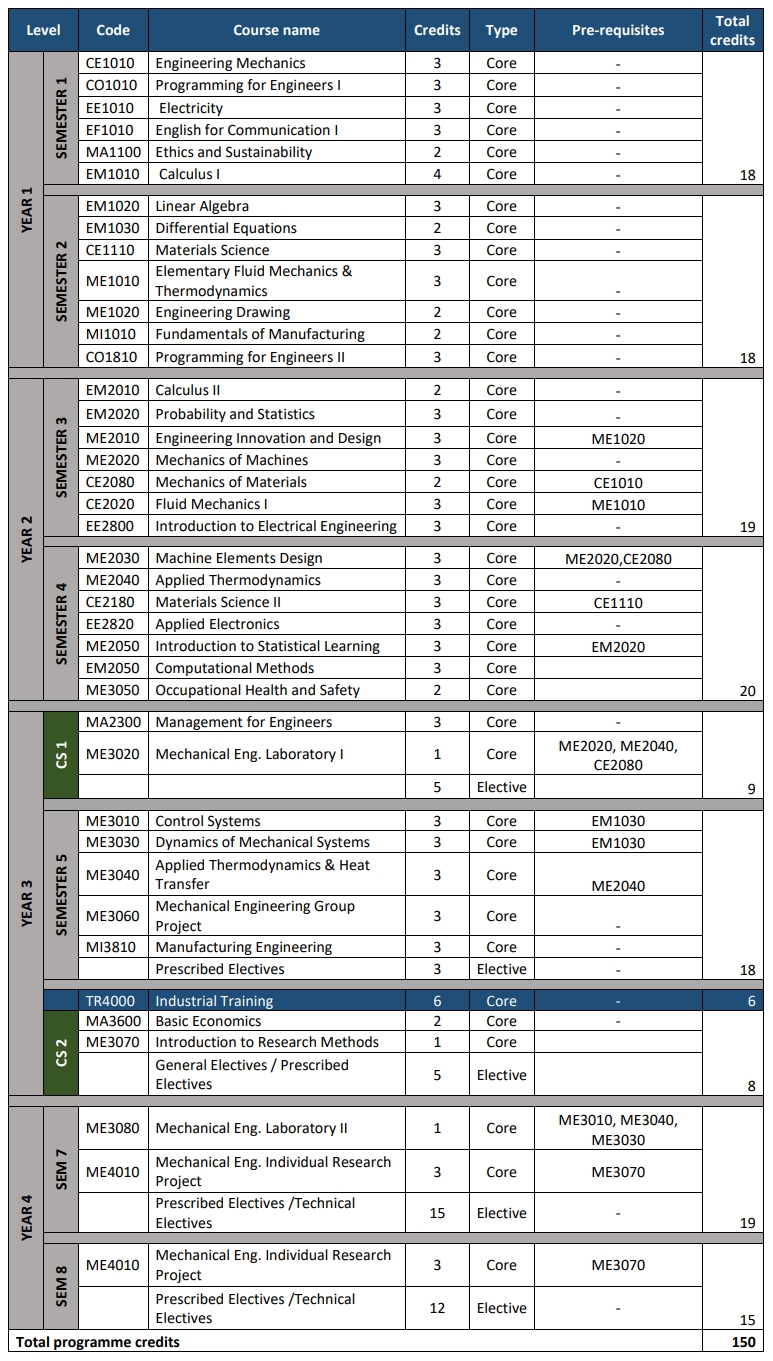
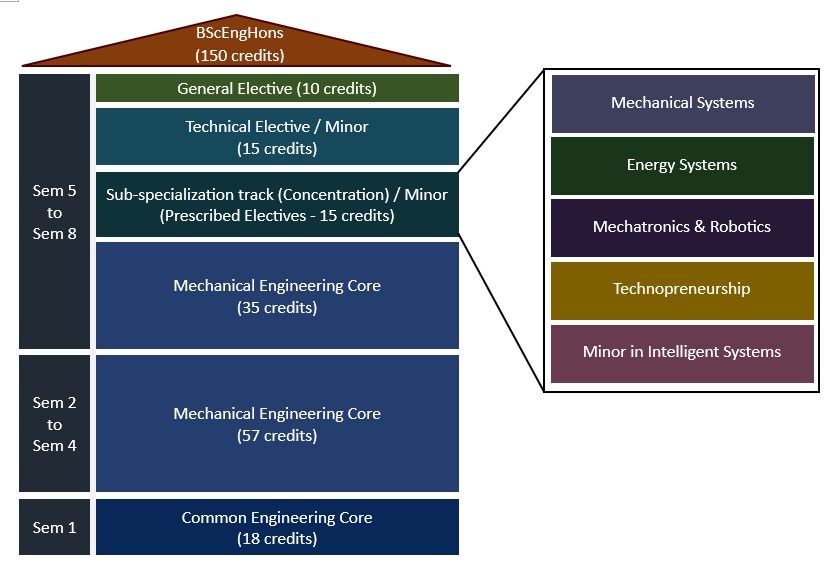
The specialization programme in Mechanical Engineering starts after the common 1st semester of 18 credits for all engineering streams of the Faculty of Engineering, University of Peradeniya

Undergraduate Curriculum

From 2024 intake onwards – From E/22 batch

The undergraduate curriculum is designed to build a strong foundation in mathematics, natural sciences, and core engineering principles. It emphasizes the practical application of theory through design exercises and project-based learning, while providing exposure to state-of-the-art technologies, professional engineering practice, and the socio-economic dimensions of modern engineering.

The Programme Composition

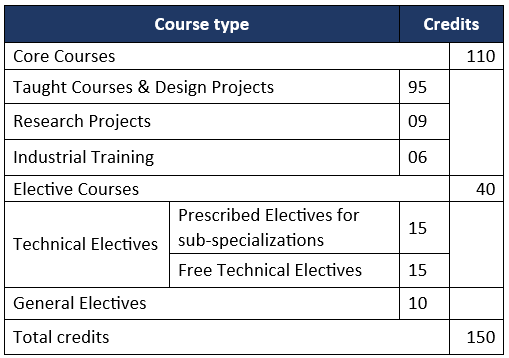
The programme comprises a balanced mix of course modules, including core courses and elective modules. Core courses are compulsory and must be successfully completed by all students, forming the foundation of the degree. In addition, students are required to select elective modules, which are offered in two categories: prescribed electives and free electives. Prescribed electives enable students to pursue sub-specialisation areas aligned with their interests, while non-technical electives provide opportunities to develop professional competencies and essential life skills, supporting well-rounded graduate development.

One credit is defined as 15 hours of equivalent lecture time per semester. Two hours of laboratory or design work, including assignments, are considered equivalent to one hour of lectures.

The overall volume of learning, or student workload, is also expressed in credits, with one credit corresponding to 50 notional learning hours per semester.

Programme Structure

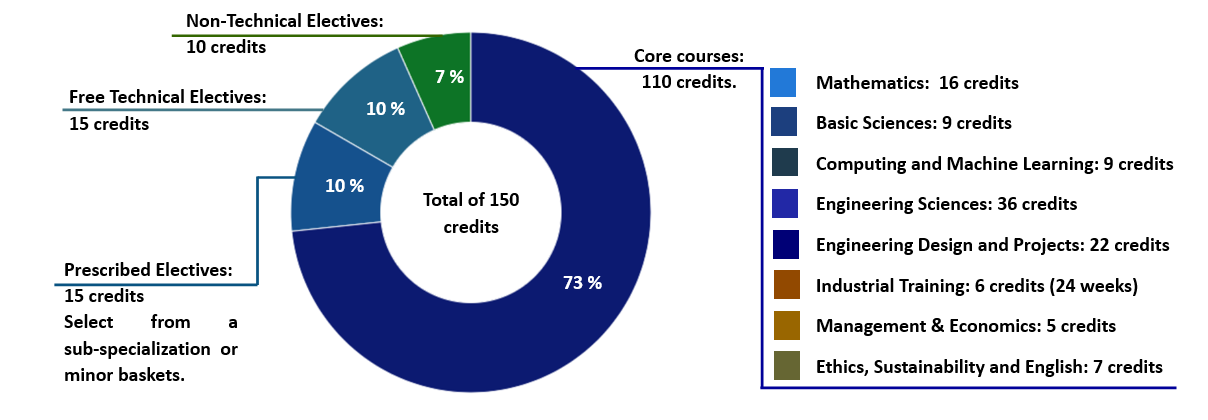
The 150-credit BScEngHons programme in Mechanical Engineering is structured progressively, beginning with a common first semester for all engineering disciplines. The specialisation in mechanical Engineering commences from the second semester, advancing through core mechanical engineering modules. In the later semesters, students can tailor their studies through prescribed electives, technical electives/minor options, and general electives, with opportunities to pursue sub-specialisations or minors in key areas.

The Credit Structure

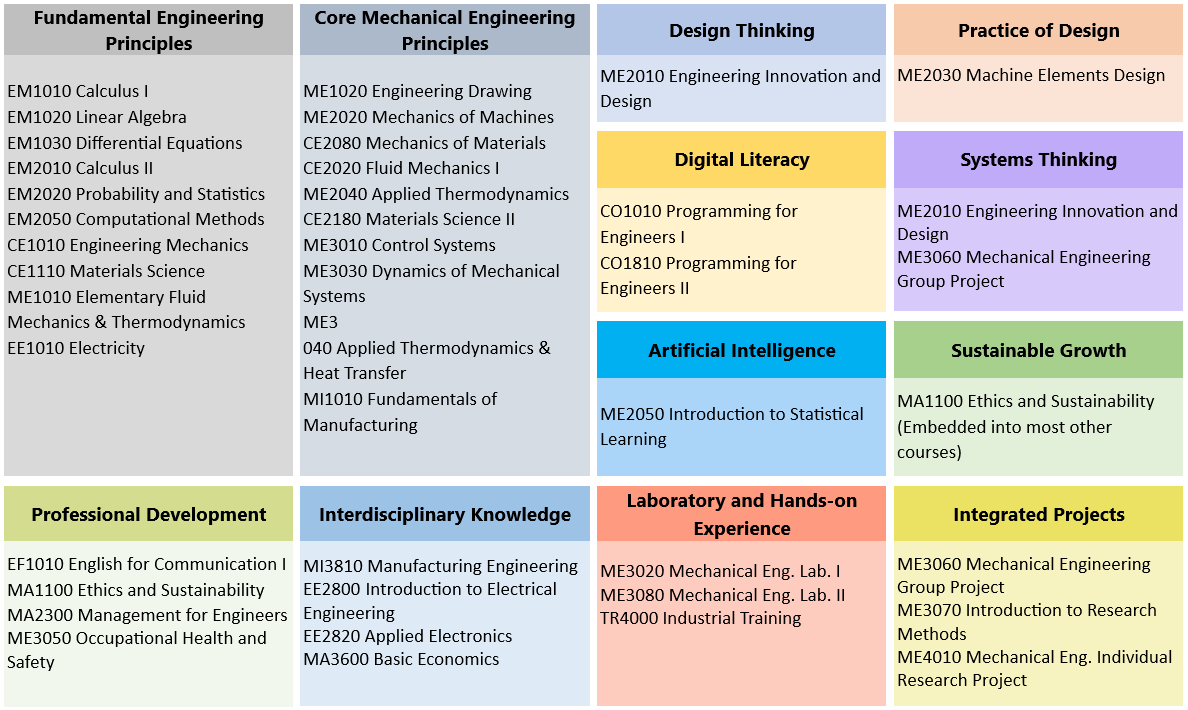
The compulsory credit structure of the programme is built around twelve key pillars (focus areas) that define the breadth and depth of the undergraduate learning experience. These areas foster strong technical competence alongside professional, interdisciplinary, and societal awareness, while providing adequate exposure to state-of-the-art technological advancements and tools. Overall, the structure offers a balanced and cohesive framework that prepares graduates to become competent, innovative, and socially responsible mechanical engineers, ready to meet the challenges of a rapidly evolving world.

Module Descriptors of ME Courses

Learn More

Sub-Specialization Tracks and Minor Programme

Further to the major in Mechanical Engineering, the department offers five concentrations (sub-specialization tracks) that enable students to pursue in-depth study in specific areas within the discipline. In addition, students specializing in Mechanical Engineering may also choose to follow a minor programme offered by the Faculty of Engineering.

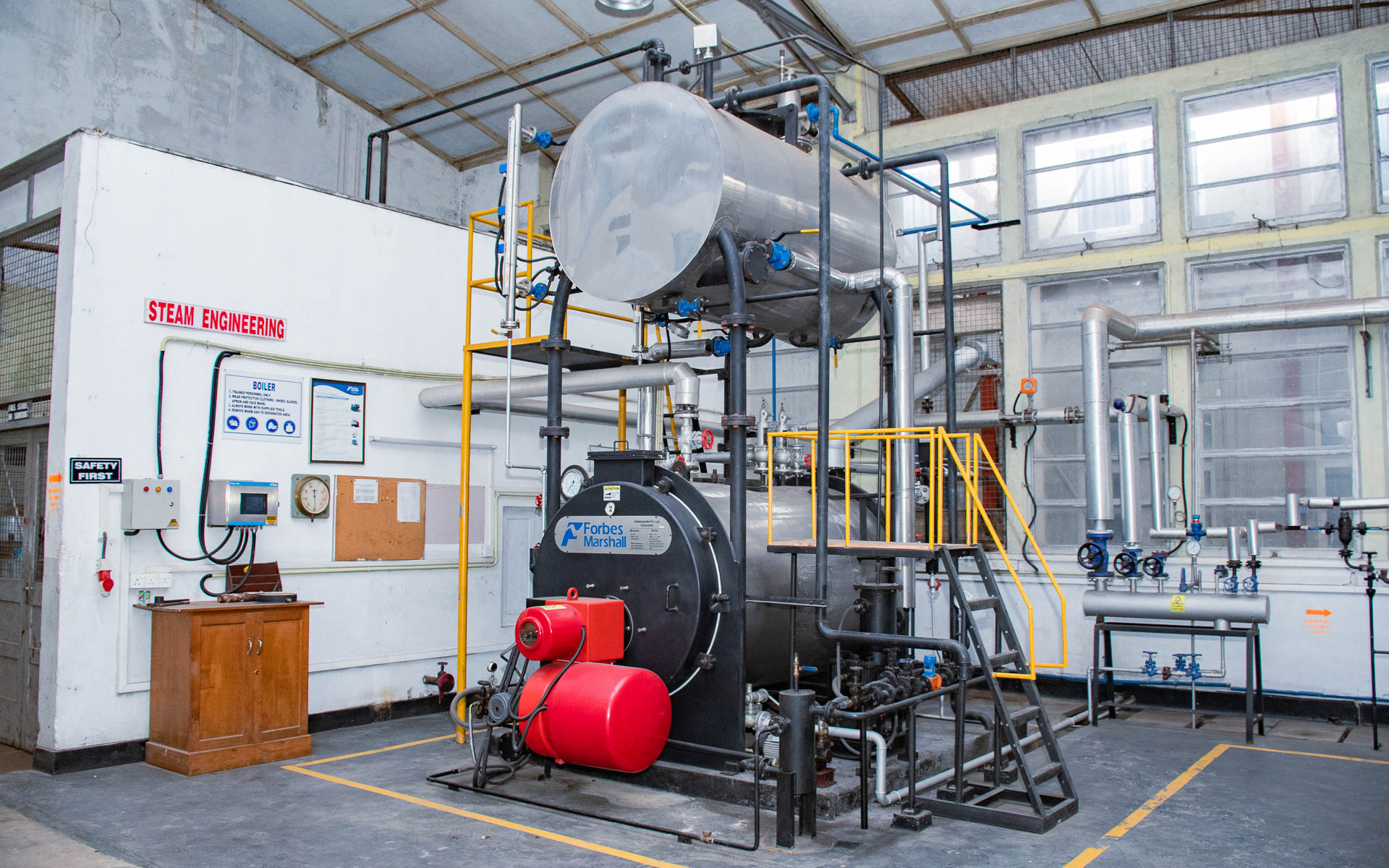
Mechanical Systems

Provides the necessary fundamental knowledge and skills required for a well-rounded engineer who could fit into a broad range of career opportunities in the field of mechanical engineering.
Certificate Courses

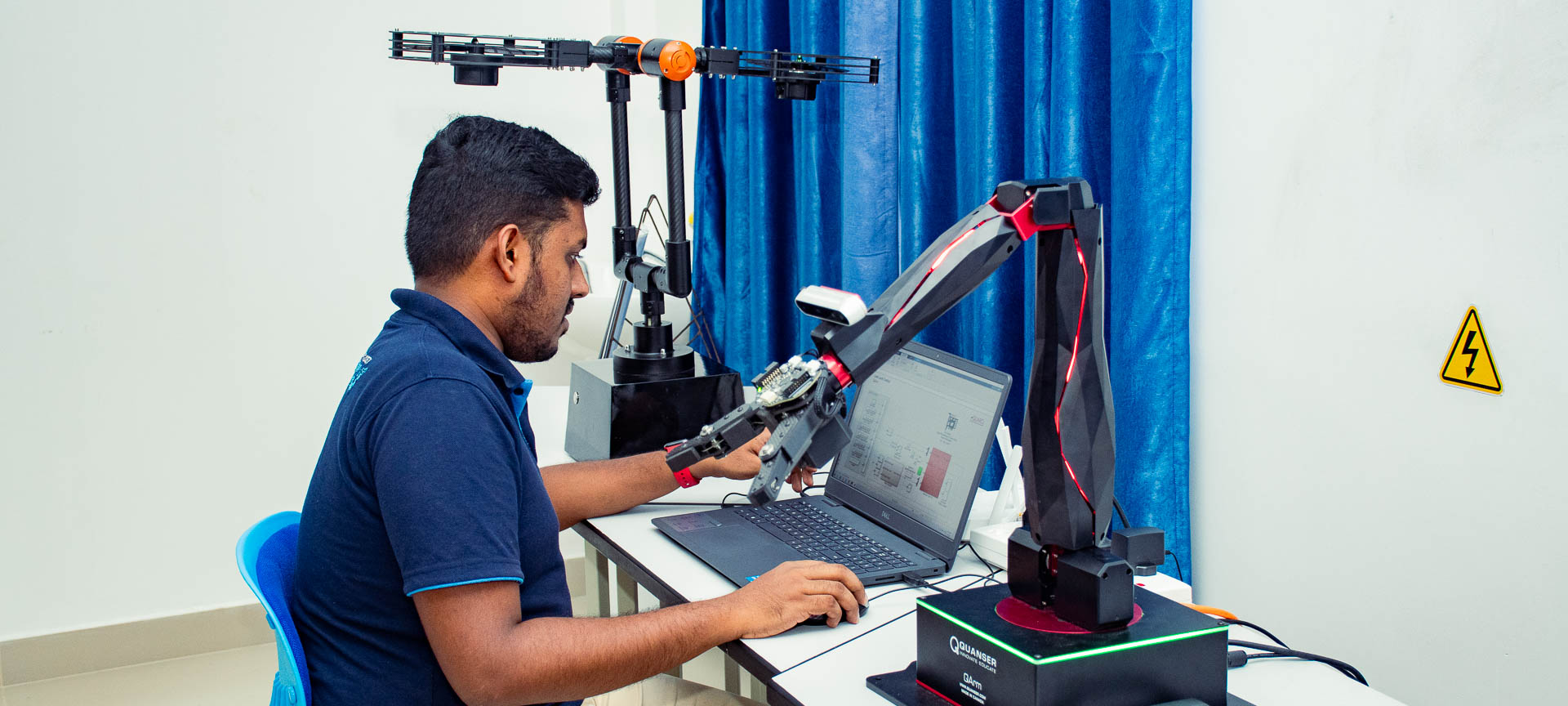
Energy Systems

This track aims at preparing the graduates to face the challenge of meeting the growing worldwide demand for energy while overcoming the environmental impact and the scarcity of conventional sources through sustainable engineering solutions.
NEW

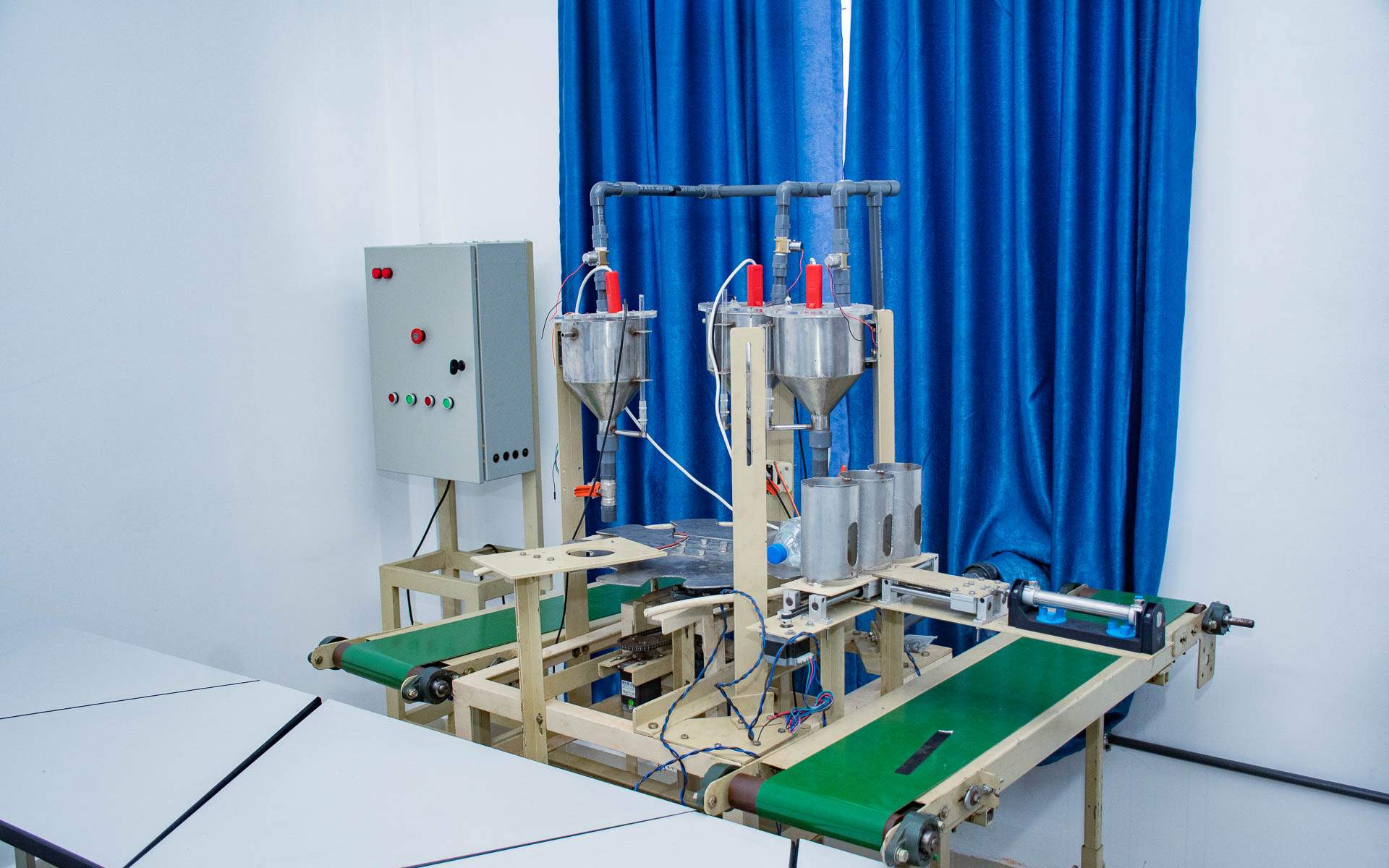
Mechatronics & Robots

This track provides the students an opportunity to gain specialized expertise in Mechanics, Microprocessors, Electronics, Real-time Embedded Systems, Robotics, Motion Control Systems and Artificial Intelligence.
Technopreneurship

This tack, as a unique combination of mechanical engineering with business and management, is introduced with the aim of promoting Technopreneurship and Entrepreneurship among engineering graduates.
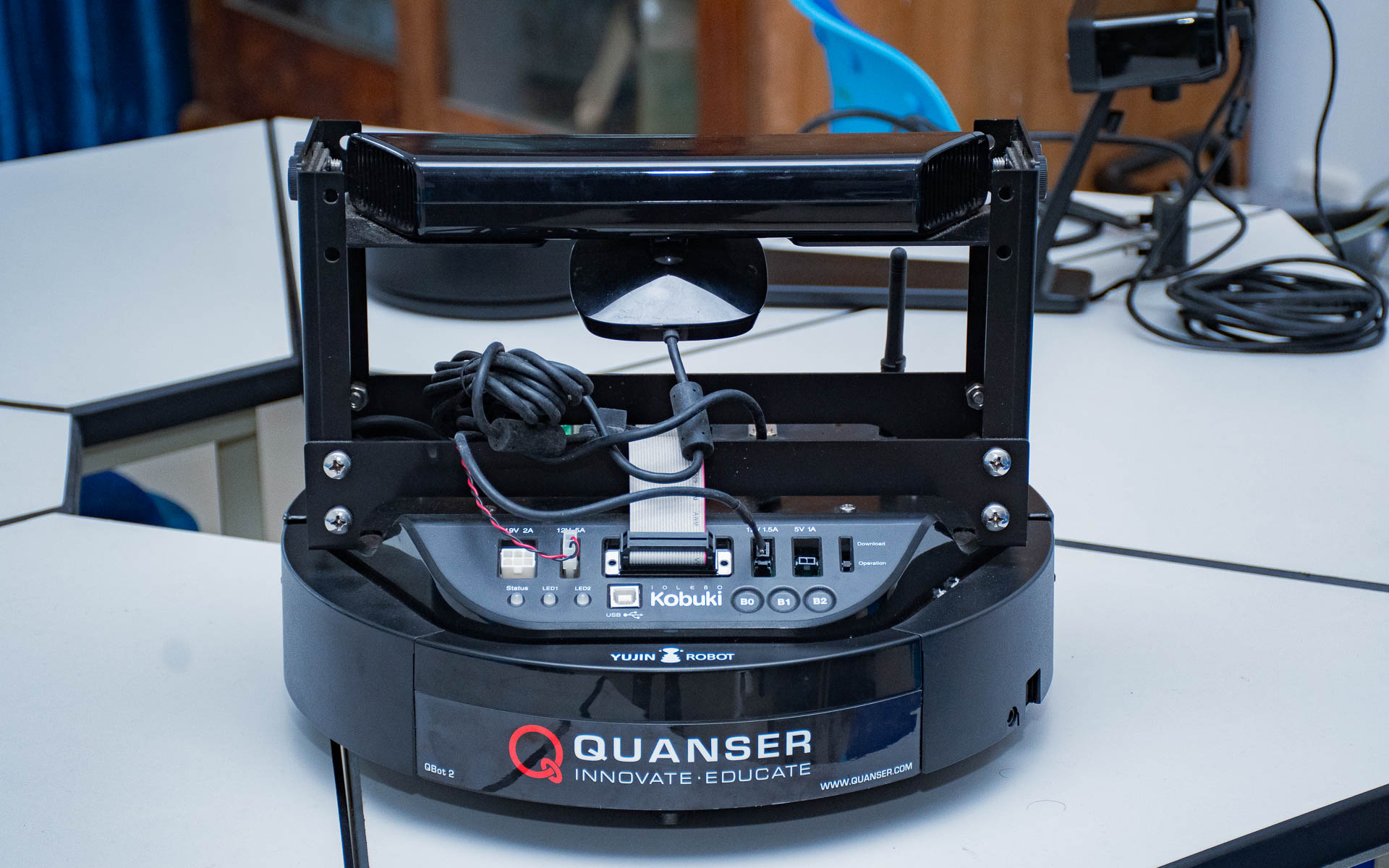
Minor in Intelligent Systems Eng.

This minor is aimed at enhancing the knowledge and skills of students in the area of intelligent systems engineering so that the graduates can improve their employability and excel in the advanced industries.This sub-specialization will be available soon.​

Biomedical Engineering

The department will soon introduce a sub-specialization vin biomedical Engineering. This sub-specialization will be available soon.
Course Map & Semester Schedule

Module Descriptors of ME Courses

Learn More

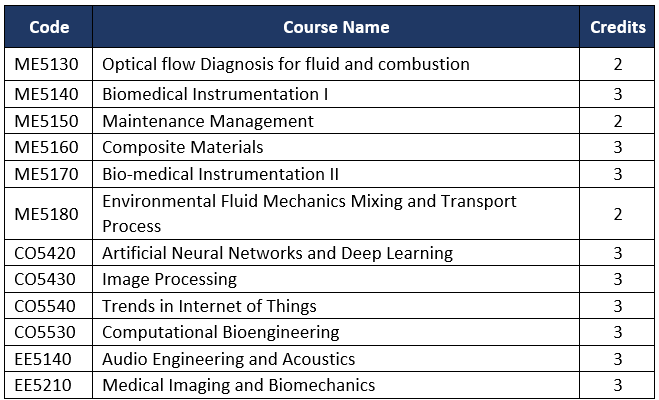
Prescribed Elective Courses

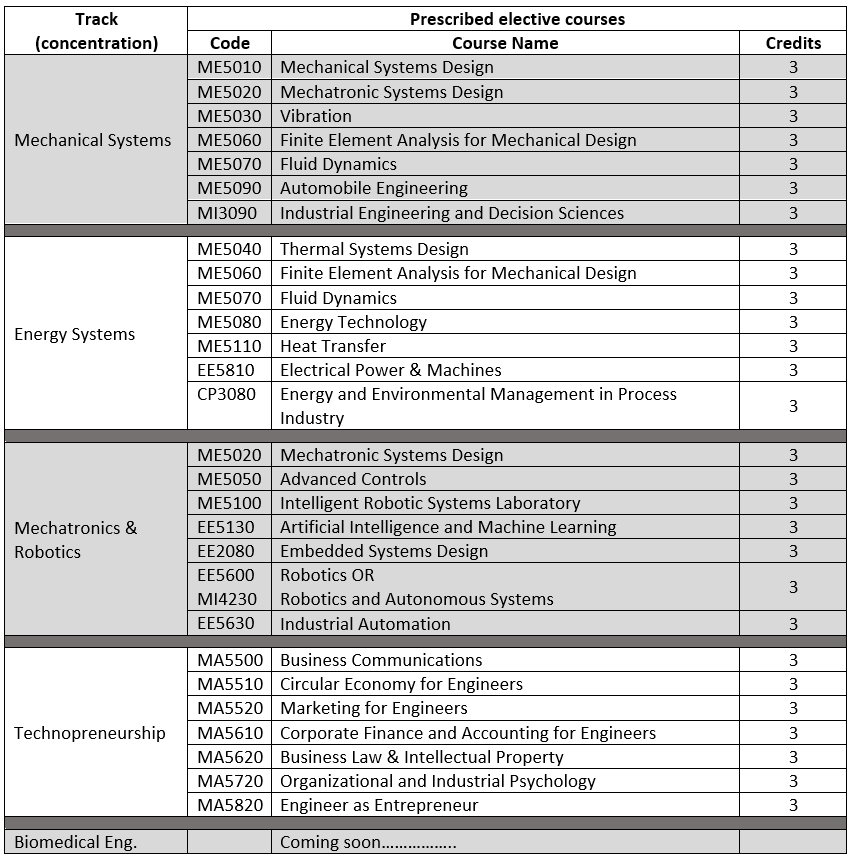
To support meaningful specialization within the Mechanical Engineering programme, the department has structured each concentration (sub-specialization track) around a carefully curated set of advanced course modules.

For each concentration, the department has identified a basket of seven course modules, referred to as Prescribed Electives. These modules are designed to collectively provide both theoretical depth and applied competency in the selected area of specialization.
Students are required to successfully complete five (5) modules from the prescribed elective basket of their chosen concentration in order to qualify for and be awarded the respective sub-specialization.

Module Descriptors of ME Courses

Learn More

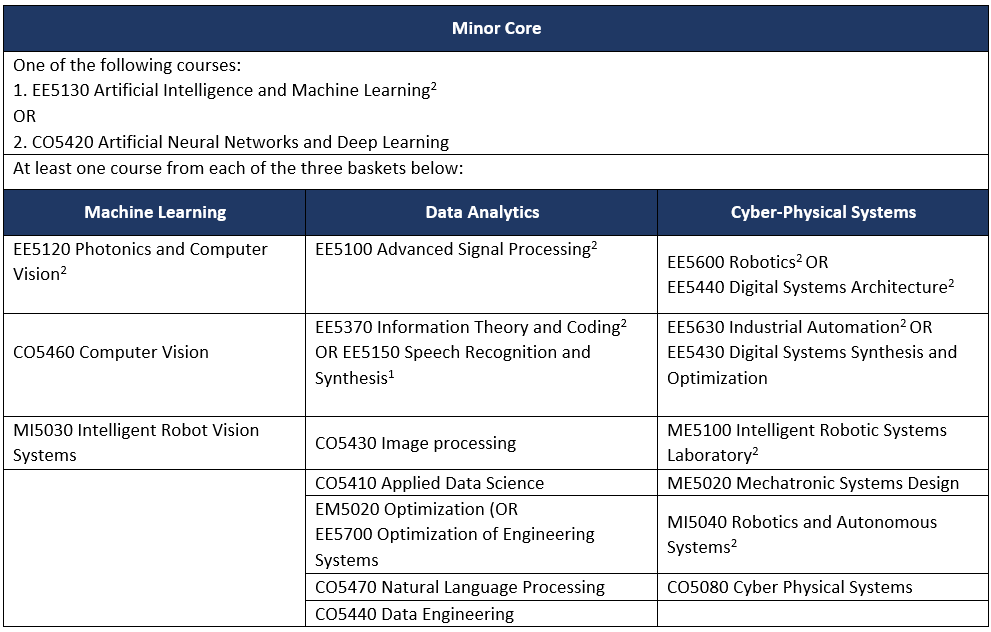
Minor Programme in Intelligent Systems

Industry 4.0 relies heavily on two fundamental pillars: analytics and intelligence, and human-machine interaction. To excel in the dynamic landscape of advanced industries, our graduates must elevate their proficiency in these core areas. The inherently interdisciplinary nature of these pillars demands the convergence of diverse engineering disciplines to create a cohesive minor program in intelligent systems engineering.

Aims: To enhance the knowledge and skills of students in the area of intelligent systems engineering so that the graduates can improve their employability and excel in advanced industries.

Intended Learning Outcomes:

At the successful conclusion students who followed the intelligent systems engineering minor

will be able to;

  1. Design and implement machine learning algorithms for industrial applications.
  2. Design and implement data analytics algorithms to extract information from large datasets.

3. Design and implement cyber physical systems for industrial applications.

The Programme Structure

Free Elective Courses

Note: Prescribed Elective courses listed in one track of sub-specialization can be considered as free technical elective courses for other tracks.

General Elective Courses – Non-GPA

A student needs to earn 10 credits from all General Elective courses offered by the faculty /departments to meet the departmental requirement of General Electives.  The departmental requirement of General Electives is given in Table 4. 

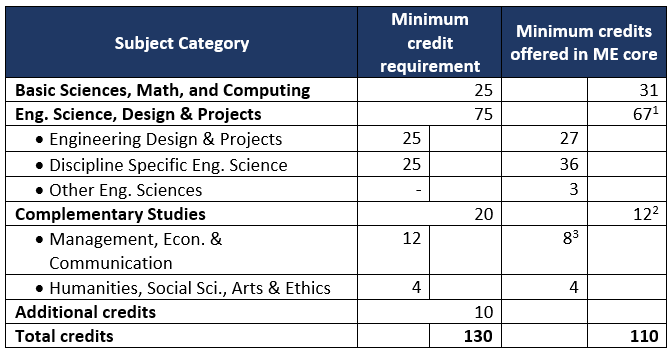
Compliance With Washington Accord Accreditation Requirements

115 credits of Technical Elective courses will make the total 82 credits thus will satisfy the minimum requirement.

 210 credits of General Elective courses will make the total  22 credits thus will satisfy the minimum requirement.

3 The students are required to take 4 credits of courses in the area of Management, Econ. & Communication. The students who opt to follow Technopreneurship sub-specialization will follow 15 credits of courses in the area of Management, Econ. & Communication. This will satisfy the minimum requirement.

Previous Curricula:

Undergraduate curriculum prior to 2018 intake – Up to E/16 batch

Undergraduate curriculum from 2019 to 2023 intake – From E/17 batch to E/21 batch