News
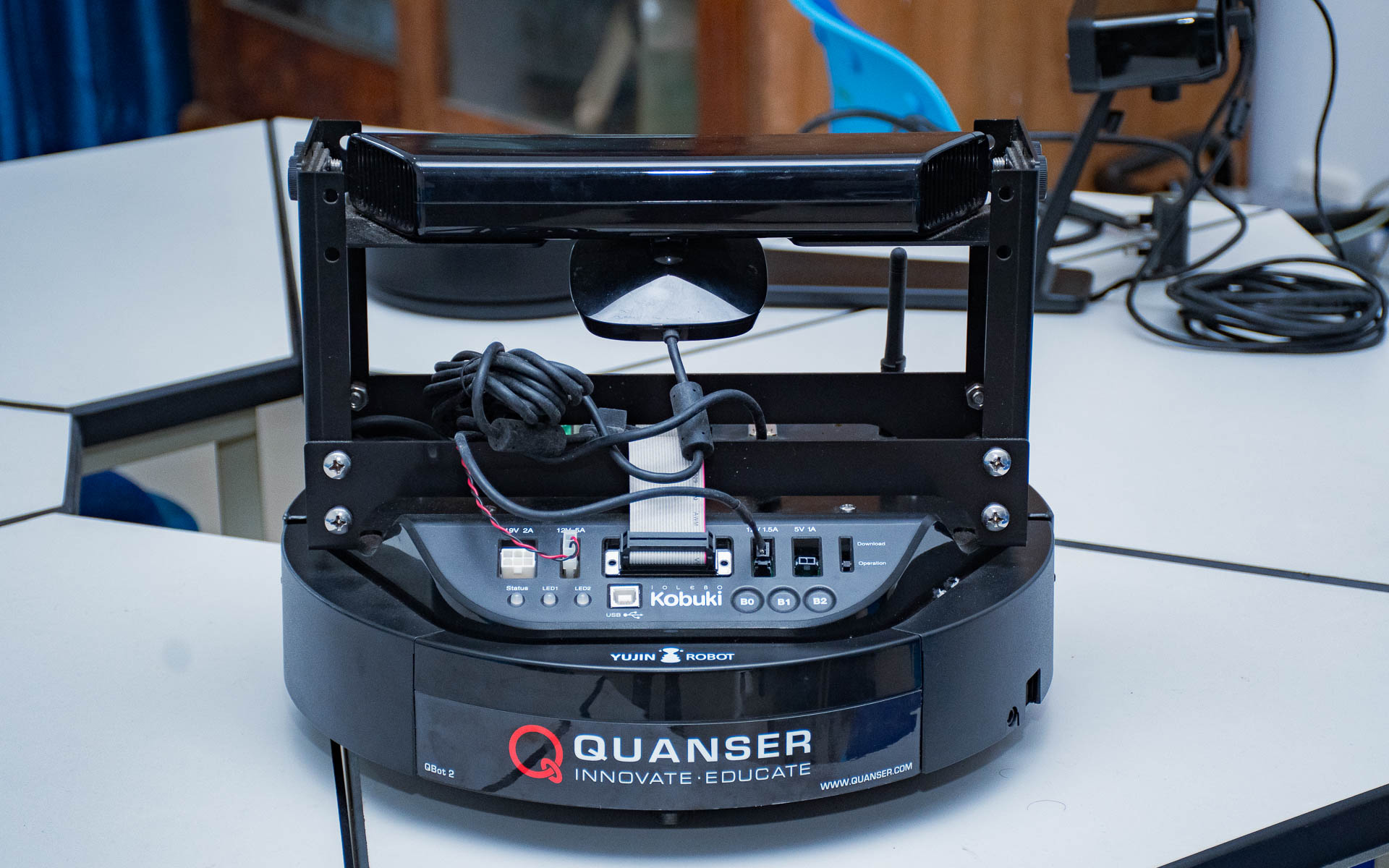
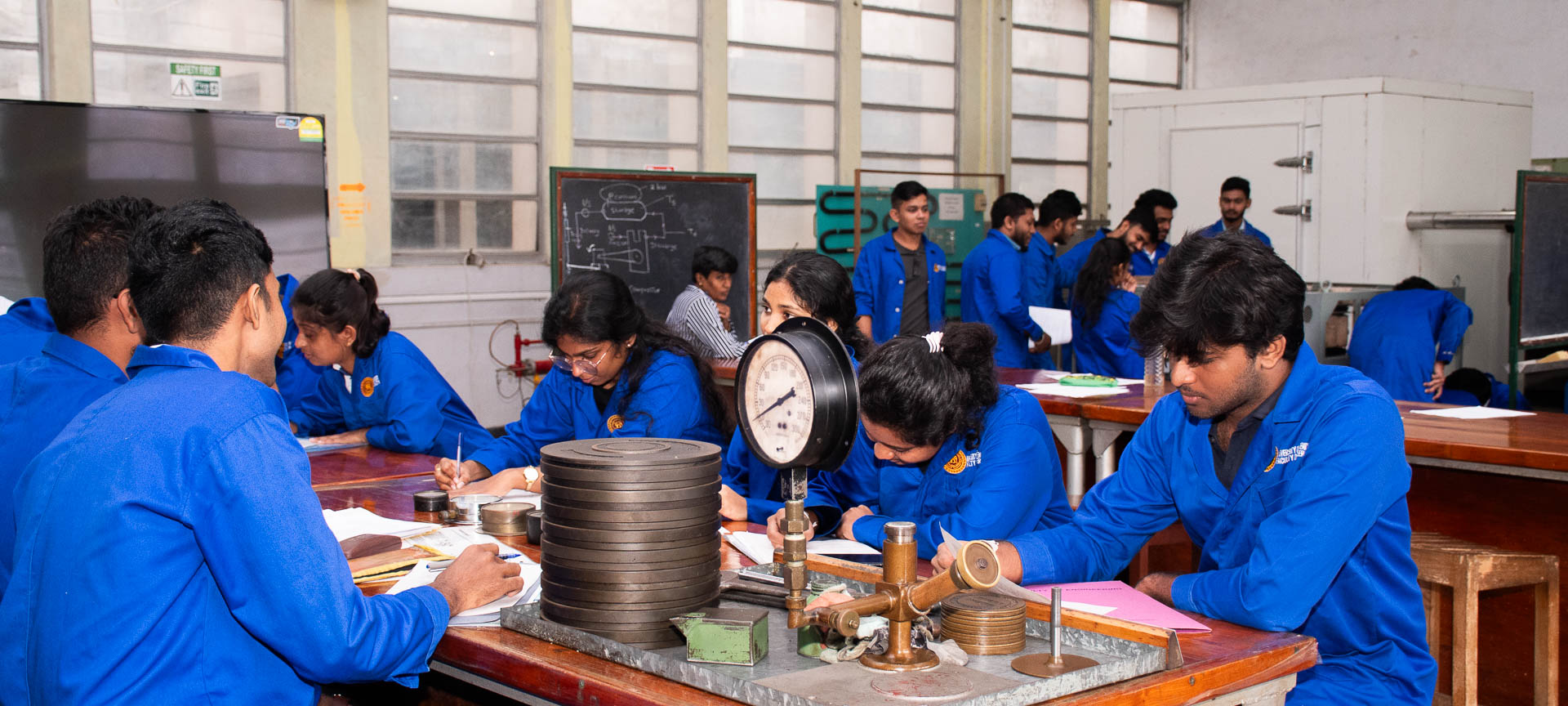
Four 4-year, Bachelor of the Science of Engineering Honurs, BScEngHons, degree with specialization in Mechanical Engineering.
Undergraduate Programme
The undergraduate curricular is developed with a special emphasis on building a sound theoretical background of mathematics, natural sciences and engineering fundaments, putting theory into practice through design exercises and projects, providing adequate exposure to state-of-the-art technologies, engineering profession and practice as well as socio-economic aspects of modern-day engineering.
To equip a student with a broad background for a career in Mechanical Engineering, courses are provided in design, research and development, and maintenance and servicing relating to a wide variety of industries concerned with the generation, conversion, control and utilization of power, the construction of mechanical devices, instruments, machines, mechanisms, mechatronics systems, robotics, and electro-mechanical and Thermos-fluids equipment. Further, courses on communication, management, economics, social sciences and humanities add a multi-disciplinary flavor into the mechanical engineering curricular in order to help our graduates to become well-rounded engineers.
Designs & Projects
- 3rd Semester: Engineering Innovation and Design
- 4th Semester: Machine Element Design
- 5th Semester: Mechanical Engineering Group Project
- Industrial Training of 24 weeks after the 5th
- 7th and 8th semesters: Research project
- Elective courses
- Mechanical Systems Design
- Mechatronic Systems Design
- Thermal Systems Design
- Social Project
After successfully completing the Bachelor of the Science of Engineering honours degree specializing in Mechanical Engineering, the graduates should be able to:
PO 01: Apply knowledge of mathematics, natural science, computing and engineering fundamentals, and the engineering specialization to develop solutions to complex engineering problems
PO 02: Identify, formulate, research literature and analyse complex engineering problems to reach substantiated conclusions with holistic considerations for sustainable development.
PO 03: Design creative solutions for complex engineering problems and design systems, components or processes to meet identified needs with appropriate consideration for public health and safety, whole-life cost, net zero carbon as well as resource, cultural, societal, and environmental considerations as required
PO 04: Conduct investigations of complex engineering problems using research methods including research-based knowledge, design of experiments, analysis and interpretation of data, and synthesis of information to provide valid conclusions.
PO 05: Create, select and apply, and recognize limitations of appropriate techniques, resources, and modern engineering and IT tools, including prediction and modelling, to complex engineering problems.
PO 06: Analyze and evaluate sustainable development impacts to society, the economy, sustainability, health and safety, legal frameworks, and the environment, when solving complex engineering problems.
PO 07: Apply ethical principles and commit to professional ethics and norms of engineering practice and adhere to relevant national and international laws. And demonstrate an understanding of the need for diversity and inclusion.
PO 08: Function effectively as an individual, and as a member or leader in diverse and inclusive teams and in multi-disciplinary, face-to-face, remote and distributed settings.
PO 09: Communicate effectively and inclusively on complex engineering activities with the engineering community and with society at large, such as being able to comprehend and write effective reports and design documentation, make effective presentations, taking into account cultural, language, and learning differences.
PO 10: Apply knowledge and understanding of engineering management principles and economic decision-making and apply these to one’s own work, as a member and leader in a team, and to manage projects and in multidisciplinary environments.
PO 11: Recognize the need for, and have the preparation and ability for i) independent and life-long learning, adaptability to new and emerging technologies and iii) critical thinking in the broadest context of technological change
After a few years of graduation with Bachelor of the Science of Engineering honours degree specializing in Mechanical Engineering, the,
PEO1: Graduates will become professional engineers with multidisciplinary skills, considerate of diverse local and international socio-cultural settings, being mindful of relevant ethics, safety, and holistic sustainability
PEO2: Graduates will be mindful of socio-economic impacts of utilizing human and environmental resources, and considerate of human and environmental well-being in decision making.
PEO3: Graduates will be creative, innovative and be entrepreneurial.
PEO4: Graduates will be ready to take up leadership roles through inclusiveness and collaborations between diverse and multidisciplinary stakeholders in the private and state sectors at local and international contexts.
PEO5: Graduates will engage in cutting edge research and effective dissemination of knowledge and be passionate for continued career development by pursuing PG and CPD programs.
The BScEngHons specialization in Mechanical Engineering programme is accredited by the Institute of Engineers Sri Lanka (IESL), which is a signatory of the Washington Accord. Accordingly, our graduates will be eligible for engineering practice at a professional level and for pursuing further studies in countries participating in this Accord, such as the USA, UK, Canada, Australia, New Zealand, Singapore, Hong Kong, Japan, and Korea.
Undergraduate curriculum from 2024 intake onwards – From E/22 batch
The specialization programme in Mechanical Engineering starts after the common 1st semester of 18 credits.
Undergraduate curriculum from 2019 to 2023 intake – From E/17 batch to E/21 batch
Undergraduate curriculum prior to 2018 intake – Up to E/16 batch